Showing posts with label Chinese. Show all posts

Tofu noodle salad

This is my take on one of my favourite Chinese appetizers, a salad made with what I believe is dried tofu noodles. (Correct me if I'm laboring under false impressions.) I love it for the texture it has; a little chewy and rough in a good way. I've never been able to locate the exact source of the noodles, even in Chinese grocery stores (I really should ask the waitress) but I've tried it using "tofu noodles" found commonly in the states. 

Original tofu noodle salad, taken in Japan
These noodles are much softer and much less textured than the ones used in the salad (picture left) but I still like it. They're made by House and advertised as being low carb, gluten free and only 20 kcal per package. The gluten-free doesn't impress me (because tofu is not supposed to contain any wheat anyway) but 20 kcal per serving sounds like a good idea. I don't know why they call them "Tofu Shirataki" though - shirataki looks similar, but is a whole different product, made with konnyaku (konjac in English?) and has a different taste and texture. But I digress.


What you need: (per person)

1 package of Tofu "shirataki" noodles - I use the thinnest kind for this salad, but you're free to try the flat kind!
leek - about an inch and a half of the white part
1 teaspoon Chinese chicken bouillon powder
2 teaspoons sesame seed oil
dash of black pepper

(optional: 1 teaspoon rice vinegar, some lettuce, some other vegetables such as cucumber or peppers)
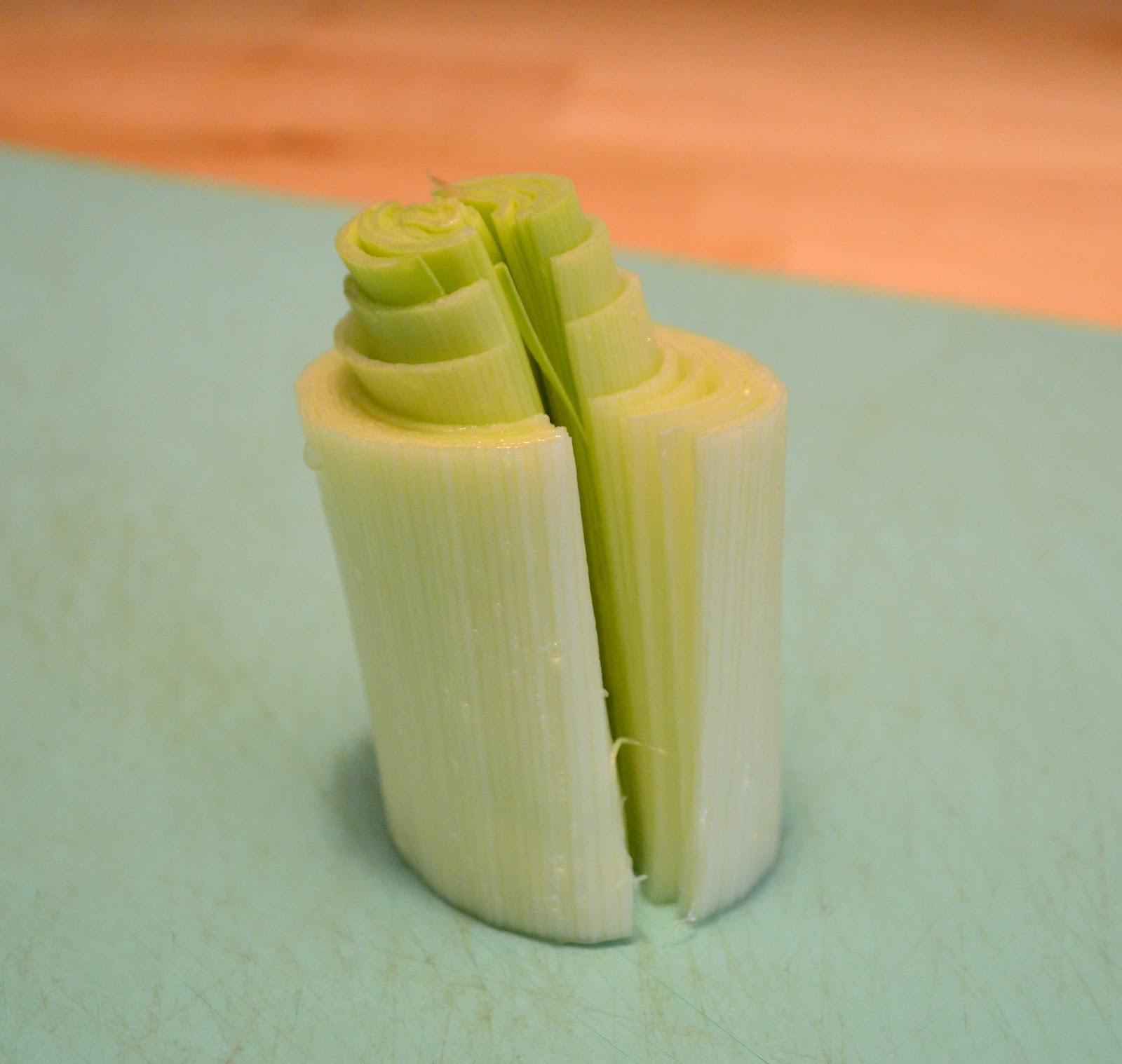
Split your leek down the middle. And yes, I have been practicing horticulture on a small scale inside my fridge. 

Lay both side down flat, and make the thinnest slivers you can with a sharp knife. 

The thinner the better - mine aren't really ideal... I'm sure you could do better!

In a bowl, mix the leek, sesame seed oil, Chinese chicken bouillon powder and dash of black pepper. Combine well and let it sit while you get the noodles. 

Yes, I realize that chicken bouillon powder has MSG in it. But no, I would not replace it with anything else in this dish. My take on MSG is this - sure, it's not natural, but it's not necessarily evil. A bit of it (chicken bouillon powder) now and then goes a long way and it's indispensable in some Chinese dishes, those that don't involve soy sauce or oyster sauce. 

Open the package of noodles into a fine-meshed sieve and and rinse under cold water for a minute. Drain really well - leave the sieve over a bowl for a few minutes if you aren't too hungry. 

Toss with the leek mixture and serve. You can garnish it with a few lettuce leaves, or even add some other vegetables, such as cucumbers or red or green peppers - just cut them as thinly as possible, like the leeks. You can also add a small splash of vinegar, if you like sour food. I do!

If I'm not too hungry, this salad alone is enough for lunch. Otherwise, I'd serve it with any Asian food - Chinese or Japanese, usually. Itadakimasu!

Read More

Baby bok choy salad

Baby bok choy is common in Japan (but only the young leaves; we never see the sturdier ones in Japan) but they're usually eaten cooked. A nice green vegetable that I never paid much attention to - until I tried it raw in a salad at a dinner with friends - and since then, it's basically been my go-to salad green. 

Actually, a lot of greens eaten raw in many countries are cooked in Japan. Raw spinach is not so common there, and my parents were quite shocked when they heard that in Russia we eat napa cabbage raw. I think I still prefer napa cabbage cooked (especially the thick stems) but bok choy I now prefer raw. 

3 baby bok choy - choose tender ones, not the ones on the verge of turning into tough monsters
3 teaspoons sesame seed oil
2 teaspoons soy sauce
1 teaspoon sugar (any kind)
1 teaspoon white vinegar (you can use any kind, as long as it's white. No Balsamic. God forbid.)
2 teaspoons sesame seeds 

First, cut them the bok choy half, starting from the stem. 

Again cutting from the stem, cut them into wedges, This should make it easier to cut into wedges without everything falling apart. If they do, it's no big deal - I cut them into wedges chiefly for the looks of it. 

You can't say this isn't pretty. 

In a small bowl, combine the dressing ingredients. If your sesame seeds aren't toasted, you can do that by putting them in a small frying pan and tossing them over high heat for half a minute or until you start to smell them. (Do not let them turn brown.)

Toss the bok choy with the dressing in a large bowl, and serve immediately. Do not toss the salad ahead of time - it will make the lovely green wilt and they will not taste as luscious. 

Serves two. 

You can also make loads of this dressing and keep it in the fridge in a jar. I also use it on normal salad, tomatoes, whatever I have lying around. 

You can also use a mix of white and black sesame seeds, or black. 

Read More

Broccoli and beef in oyster sauce


Surprisingly, some of my friends say they aren't fond of Chinese food. I think it's one of the two greatest cuisines in the world - the other being Italian. One reason for their aversion is the prevalence of cheap takeaways - food that I am convinced Chinese people sell to us but would never eat themselves. They know what good food is.

Well, you don't have to get takeaways - Chinese food is as simple as Italian; it's mostly stir frying and you just need two or three basic condiments. My friend James complained about gloopy cornstarch - my recipe does use cornstarch, but in very moderate amounts, and I swear the resulting sauce is Not gloopy in any way.

So here's what you need:


1 pound broccoli (can be a bit more)
1/2 pound beef (for stir fry)
1 tablespoon chopped garlic
1 tea spoon chopped ginger
1/4 cup + 1 tablespoon Shaoxing wine
2 teaspoon cornstarch

1 teaspoon soy sauce
1.5 tablespoon oystersauce (+ 3 tablespoons of water) 
2 tablespoons sesame seed oil

(I added a lone yellow ball zucchini because it was lying forlornly on the counter. I also thought it might give the dish a nice splash of color!)

Take your beef and slice it into strips, if not sold that way. Any kind of beef will do, as long as it's not too tough and sinewy. Pour one tablespoon of the Shaoxing wine and add two teaspoons of cornstarch (don't be afraid!) Mix with your hand briefly and set aside. This should tenderize the meat a bit.


As always - chop up the ginger and garlic and make them sizzle in sesame seed oil. Turn the heat up as high as it will go, and briskly stir fry the beef. When it's half browned, add the vegetables.

Give it a good stir and toss, and pour in the wine.

Add a tiny bit of soy sauce. Just a little bit. Keep on stir frying over high heat. Wish I had a wok...

In a small bowl or cup, dissolve the 1.5 tablespoons of oyster sauce in twice as much water. Pour in and continue tossing and stirring until the broccoli are cooked but still retain a bit of crunch. If the sauce thickens too much (this might happen if you have a strong gas stove), just add a tablespoon of water at a time.

Immediately pour over a mound of freshly cooked rice, and serve.

Feeds two!


Read More

Rapini with oyster sauce


Oyster sauce is the Chinese version of ketchup. I think. It goes on just about anything, and it pretty much brushes up boring food into palatableness. I use soy sauce more often (especially in Japanese cuisine) but oyster sauce is my go-to when I make a stir fry.

Today I just chopped up some rapini (or broccoli rabe) for a 5-minute dinner. Quick, painless and delicious.

Here's what I used:

A bunch of rapini (broccoli rabe)
4 garlic cloves
2 tablespoon of sesame seed oil
1/2 cup of Shaoxing wine
Pinch of salt

Peer the cloves of garlic and slice thinly. 

Throw them in a frying pan with sesame seed oil and wait until they start to bubble nicely. 

While you wait for it to sizzle, wash the broccoli rabe in cold water, drain and chop roughly into inch-long pieces. 

Toss the thicker ends in the pan first - you want to give them a bit more time to cook. Toss (or stir if your left hand isn't complete master of tossing pans of unwieldy food!) and cook on high heat for a couple of minutes, then add the softer leaves.

Toss once or twice, and pour in that wine. Dry white wine or (water at a pinch) is fine, but this Chinese wine gives food a mellower and deeper dimension. It's worth searching out!

Add a pinch of salt, toss well and cook for a couple of minutes or so until the leaves are wilted and the stems a bit crunchy but no longer hard.


Pour over a bowl or plate of rice and realize that white rice on a white plate is not photogenic. 

Drip oyster sauce over the greens, and serve immediately. 


A bunch of rapini would make a light meal for two. You can substitute with bok choi - vegetables with a slight bitterness go very well with the complex sweetness of the oyster sauce. Enjoy!

Read More

Black bean sauce stir-fry


Chinese, along with Italian, is one of the cuisines I make the most often - it's quick, easy, and you can pretty much clean out your fridge as well. Here I've used a couple of green vegetables and pork, but you can go vegetarian, replace the vegetables with other green vegetables or use some other kind of meat - or even squid would be nice. 


Here's what you need:

Broccoli - a bit more than a pound (500g)
Snow peas - half a pound (220g)
Pork chops - half a pound (220g) (you can use tenderloins, pork chops, anything you like)
Ginger - 1 tablespoon, diced
Garlic - 1 tablespoon, diced
Sesame seed oil - 1 tablespoon
Soy sauce - 1 tablespoon
Black bean sauce - 1 tablespoon (the one I have is "black bean garlic sauce" but it's not a huge difference)
Shaoxing wine - half a cup (this is a common cooking wine - if you don't have it, you can use the same amount of dry white wine. But if there's a Chinese grocery store near you, go find it - it makes a difference! And it's also cheap - the bottle here cost me only 2 or 3 dollars at Chinatown.)
optional: a tablespoon of hot sauce if you like it spicy!


Chop off the hard ends of the snow peas.


Cut the broccoli into narrow florets.


Finely mince the garlic (not shown) and ginger. It's safe to say that almost any Chinese stir fry starts with minced garlic and ginger simmering in oil. In fact, I keep ziplock bags of the stuff in a freezer and break off bits to use whenever I need. Handy if you have a food processor to do all the chopping at once!


Cut the meat into narrow strips. I used pork chops (trimming the fat away first) but you can use anything - beef is recommended, squid wouldn't be a bad idea either. 


Put the sesame seed oil, garlic and ginger in a frying pan (if you have a gas stove (I do not) use a wok!) and wait until it sizzles.


Add the meat and stir fry over high heat.

When the meat starts turning white, dump in the broccoli - or the hardest vegetables if you are using some other kind.

Don't be like me and realize belatedly that your frying pan is a bit too small. Struggle to toss everything and mix without splattering the stove top with vegetables.

Pour in the wine - Shaoxing if you have it; it really deepens the flavours - and give it a good toss/mix.

Add in the snow peas (or any other softer smaller vegetable you may be using) and continue stir frying on high heat. If you feel things are getting a bit too dry/sticking to the pan, you can add some more wine, or a few spoons of water. Yes, it's cheating. Probably the right thing to do is add another dollop of oil - but I try to go light on the oil at home. 


Add the soy sauce and give it another good stirring up. 

Add a tablespoon of the black bean sauce. It's pretty potent stuff, so a tablespoon should be enough. 


Give it another thorough tossing, and add a tablespoon of hot sauce if you like. I just added in some hot sauce that came with a Vietnamese takeout. 


Serve immediately with white rice. Feeds three appetites like mine, or four people if they eat like little birds.  Leftovers are pretty good the next day, hot or cold!

Read More
 

©2009Figs in the Sun | by TNB