Showing posts with label Japanese. Show all posts

Tofu noodle salad

This is my take on one of my favourite Chinese appetizers, a salad made with what I believe is dried tofu noodles. (Correct me if I'm laboring under false impressions.) I love it for the texture it has; a little chewy and rough in a good way. I've never been able to locate the exact source of the noodles, even in Chinese grocery stores (I really should ask the waitress) but I've tried it using "tofu noodles" found commonly in the states. 

Original tofu noodle salad, taken in Japan
These noodles are much softer and much less textured than the ones used in the salad (picture left) but I still like it. They're made by House and advertised as being low carb, gluten free and only 20 kcal per package. The gluten-free doesn't impress me (because tofu is not supposed to contain any wheat anyway) but 20 kcal per serving sounds like a good idea. I don't know why they call them "Tofu Shirataki" though - shirataki looks similar, but is a whole different product, made with konnyaku (konjac in English?) and has a different taste and texture. But I digress.


What you need: (per person)

1 package of Tofu "shirataki" noodles - I use the thinnest kind for this salad, but you're free to try the flat kind!
leek - about an inch and a half of the white part
1 teaspoon Chinese chicken bouillon powder
2 teaspoons sesame seed oil
dash of black pepper

(optional: 1 teaspoon rice vinegar, some lettuce, some other vegetables such as cucumber or peppers)
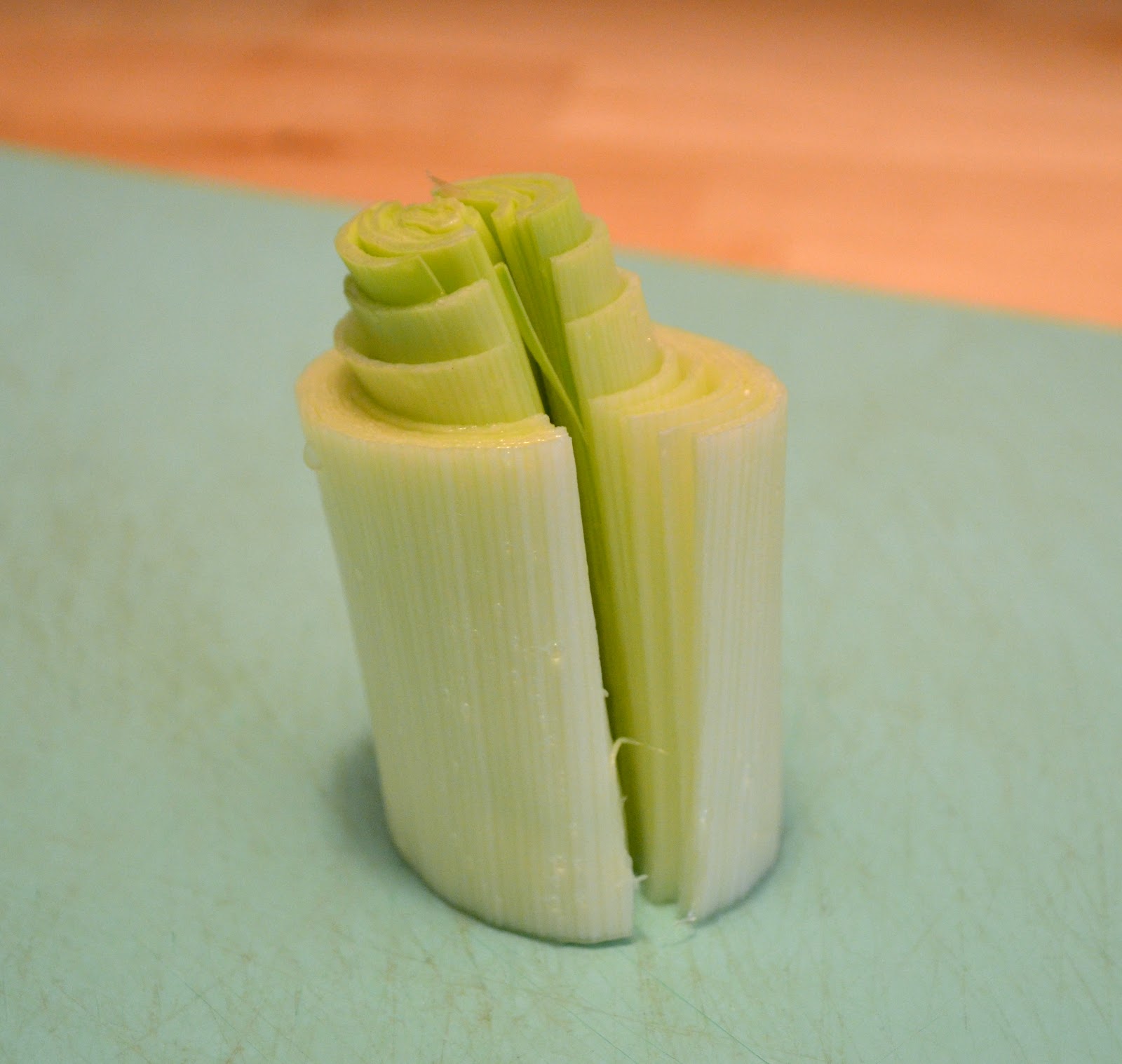
Split your leek down the middle. And yes, I have been practicing horticulture on a small scale inside my fridge. 

Lay both side down flat, and make the thinnest slivers you can with a sharp knife. 

The thinner the better - mine aren't really ideal... I'm sure you could do better!

In a bowl, mix the leek, sesame seed oil, Chinese chicken bouillon powder and dash of black pepper. Combine well and let it sit while you get the noodles. 

Yes, I realize that chicken bouillon powder has MSG in it. But no, I would not replace it with anything else in this dish. My take on MSG is this - sure, it's not natural, but it's not necessarily evil. A bit of it (chicken bouillon powder) now and then goes a long way and it's indispensable in some Chinese dishes, those that don't involve soy sauce or oyster sauce. 

Open the package of noodles into a fine-meshed sieve and and rinse under cold water for a minute. Drain really well - leave the sieve over a bowl for a few minutes if you aren't too hungry. 

Toss with the leek mixture and serve. You can garnish it with a few lettuce leaves, or even add some other vegetables, such as cucumbers or red or green peppers - just cut them as thinly as possible, like the leeks. You can also add a small splash of vinegar, if you like sour food. I do!

If I'm not too hungry, this salad alone is enough for lunch. Otherwise, I'd serve it with any Asian food - Chinese or Japanese, usually. Itadakimasu!

Read More

Rice with burdock (gobo)

So here's my first post, with photos taken with my new camera. After looking at these, my old iPhone photos are... a pain in the eye.

I was wandering around downtown yesterday looking for presents and things for my Halloween costume. Since there's a very nice Japanese food store in Soho, I stopped by to get gobo, (burdock root) one of my favourite Japanese ingredients. Here's a simple rice dish I love - simple and healthy.

You will need:
"3 cups" of short grained white rice (in this case, 1 "cup" is 180cc, or about 3/4 normal cup. So you need a total of 2 and 1/4 cups)
3 tablespoons soy sauce
half a stick (about 15 to 18 inches) of burdock root (gobo)
(1/4 cup sake if you have it)

You will also need a rice cooker.

Serves 4

Peel the skin of the burdock with a vegetable peeler. Using a sharp knife, make 4 or 5 incisions lengthwise in the burdock. Don't cut all the way through (although it's not a disaster if you do - I just find it easier to manage if the sticks are still connected at some point.)

Using the peeler again, shave it into slivers about a couple of inches long. As you go up, make more incisions - just to shave it into slivers instead of wide thin slices. using a sharp knife, thinly slice whatever the peeler can't shave. 

Plunge into cold water and leave for 5 minutes. Burdock root oxidizes very quickly. Soaking it in water will help it release some of that brown color and a slight bitter taste. 

In the meanwhile, wash your rice at least 10 times or until the water runs clear. Just massage it through your hands. By the way, if you have any glass jars or tupperware that smells of tomato sauce or garlic or whatever used to be in it, soak it in the water from washing the rice over night and the smell will disappear completely. Very handy. 

Put the rice in the pot of the rice cooker, drain the burdock and put it over the rice. Add the soy sauce and a little sake if you have some. (I didn't.) Fill the pot with water up to the "3" mark. Cook. 

When it has finished cooking, unplug the rice cooker. Open, and quickly mix the rice and the burdock, being careful not to squash or mash the rice. Close the lid and let stand for 5 to 10 more minutes. Serve.

I had this for lunch with a bit of grilled salted salmon. Miso soup would have been a great addition, too!

Read More

Oyakodon - or - chicken and egg rice bowl

 
While I am busy obsessing about cheesecakes involving two and a half pounds of cream cheese ahead of my birthday, I've been cooking 5-minute lunches and dinners. This is one of my mother's favorites, a one-bowl meal full of protein - and costs almost nothing to make! 

I always have eggs in the fridge and some chicken pieces and rice in the freezer so this is usually my choice if I'm out of time and want a quick comforting bite.

The naming of this dish will seem weird if not perverted to you if you are not Japanese. The literal translation of oyakodon would be "parent-child bowl" due to the presence of both chicken and egg in this dish. That admittedly does sound weird in English, and if you can come up with a better naming, I'd be glad to hear it!
Here's the ingredient list (per person)

4 oz (110g) chicken
1/2 a medium or smallish onion
1 large egg
1 scallion for garnish (optional)
1 tablespoon soy sauce
1 teaspoon brown sugar

a bowl of warm rice

Slice the onions into rings a quarter of an inch wide. Slice the chicken into slices of a similar thickness, a bit larger than bite-sized. 

In a small frying pan, pour half a cup of water and add the sugar and soy sauce and warm up over medium heat. Add the onion slices then the chicken, cover and cook until both onions and chicken are cooked through, about 5 minutes.

Taste the sauce and adjust to your liking - some like it saltier, some like it sweeter.

Add the egg to the pan and break the yolk, spreading the whole egg around the pan. You don't have to be too thorough - it doesn't really matter. If your egg is small, you might want to use two. Lower the heat, put the lid on and wait until the egg cooks through.

Some people like their egg more runny, some, like me, prefer it fully cooked. It's up to you, as long as you know your eggs are fresh and safe. 

Over a bowl of steaming rice, spoon the whole omelette-like mass and the sauce. Add a little chopped scallion if you like. In Japan, we usually use mitsuba - a light herb with a green bitterness not unlike celery - but as it is not very common outside Japan, I just add some scallions for color.

Comfort food, Japanese style. Enjoy!

Read More

Burdock root (gobo) with chicken

Burdock root, or gobo as we call it in Japan, is one of my favourite foods. It has an earthy woody fragrance and a nutty taste, and depending on the way you cook it, can be anything from crunchy to tender. It looks like a stick... and smells like dirt... but it's a delight to smell it cooking - such a delicate and unique smell. 

I'm not sure if you can find burdock where you are, but if you do, it's worth a try. It's fairly common in Asian speciality stores, especially Japanese. I've made two versions of the recipe - the original recipe from my mother, which calls for copious amounts of sake, dashi (soup stock traditionally made with bonito flakes or kombu) and mirin, and my adapted one with soy sauce, honey and white wine.

2 large gobo (burdock root) the one pictured has been broken and folded in half, so it's twice as long as pictured - almost a yard. It's a little over a pound I think.
2 pounds drumsticks

stewing liquid: (my version)
1/4 cup soy sauce (not pictured, because I cannot take a picture without forgetting something)
1 cup dry white wine
2 tablespoons honey
(a couple of dried red chili peppers - optional)

stewing liquid: (original version)
1/4 cup soy sauce
1/4 cup mirin
2 cups dashi
1 cup sake

Using a peeler, peel the gobo. The original recipe uses gobo with the skin on, but I prefer to peel mine, not knowing where they come from or what kind of chemicals were used. 

Chop them into 2-inch long sticks and soak them in a bowl of water for at least 10 minutes - the water will turn brown. (Left in the air, the gobo will oxidize and turn brown.)

Boil a pot of water and blanch the drumsticks - just a couple of minutes will do. I will be removing the skin anyway, but thought it might be easier to do after blanching. This step is supposed to remove some of the oiliness and smell of the meat. 

Drain and set aside, removing the skin and any excess pieces of fat.

Belatedly, here's the soy sauce. Measure 1/4 cup, add a bit of honey and give it a good stir. Add a cup of wine, stir, and put in a pot. Add a couple more cups of water and put on medium heat.

Add the drumsticks in the cooking liquid (yes, it is still room temperature) and the drained gobo sticks on them. The liquid may not cover the gobo, but don't worry. Put the lid on and bring to a boil.  

When it is boiling, there will be some scum bubbling on the surface. With a spoon, carefully scoop out all the scum. This will make a big difference in the final product, so don't be lazy!

Lower the heat to a low simmer and go away for a couple of hours or so. If the liquid seems to have evaporated too much, just add water.

In the final 30 minutes, I added two or three dried chili peppers (with the seeds removed.) This is totally optional - I like this with a slight hint of spice. 

The meat should be falling from the bone; remove the bones and discard. It will look a little like pulled pork. 

This is something that is very good the next day - cold, room temperature or warm. I usually have it accompanied with a bowl of white rice and some kind of vegetable dish or salad. 

The gobo and chicken seem to exchange flavors - curiously, the gobo becomes meaty and the chicken becomes almost chestnutty. Keeps in the fridge for 4 or 5 days - I usually make a big batch (this recipe makes a pretty large amount) and keep it; sticking my chopsticks into it at every meal for a few bites. 


Read More

Sardine and scallion rice bowl

I'm so pooped from cooking all day last weekend, I made myself a 2-minute dinner now. And it was delicious! 

I think I saw this recipe on a TV some fifteen years ago as a recipe for bachelors. I suppose it's something you could make over a fire in a cave if one was so inclined. It's something I make occasionally when I'm too tired to do anything but don't want to eat junkish food and regret it later. It hits the spot. And if I drank beer, I'd say it would go well with beer. 

This is all you need:

a bowl of rice
1 tin of sardines in oil (not smoked or otherwise flavored!)
a bunch of chopped scallions (I like a lot of it - freshens up the dish)
1 tablespoon soy sauce

Most of this I always have on hand; a tin of sardines doesn't take up much space on the shelf and I usually cook several cups of rice at a time and freeze it in cling wrap. Freezing cooked rice is better than keeping it days in the fridge; nuke it a minute or two and it's almost as good as new. 

The original recipe said a man could plop the sardines, can and all, onto the stove top. I wouldn't - because it's easier to clean a small frying pan than a stove top with oil all over it. Just dump everything into a small frying pan, all the oil included. 

Loosely separate the sardines with a fork or spoon if they are stuck together. Heat up the pan - and yes, oil will splatter a bit. Move the pan around a little bit, and flip over the sardines after a minute, to warm up the other side. 

In the meanwhile, warm up your rice (if cold or frozen) and dump the scallions on it. 

Now, dump the entire contents of the pan, sizzling hot oil and all, onto the scallions. The hot oil will make some of it wilt - good. Immediately pour a tablespoon of soy sauce over the whole thing. (I'd hesitate to use more because tinned sardines are often quite salty already.)

Dig in with a spoon or fork. 

And don't leave the splattered oil on the stove surface until the next day. A quick swipe with a sponge will take care of it now, but tomorrow you'll have to scrub. 


Read More
 

©2009Figs in the Sun | by TNB